
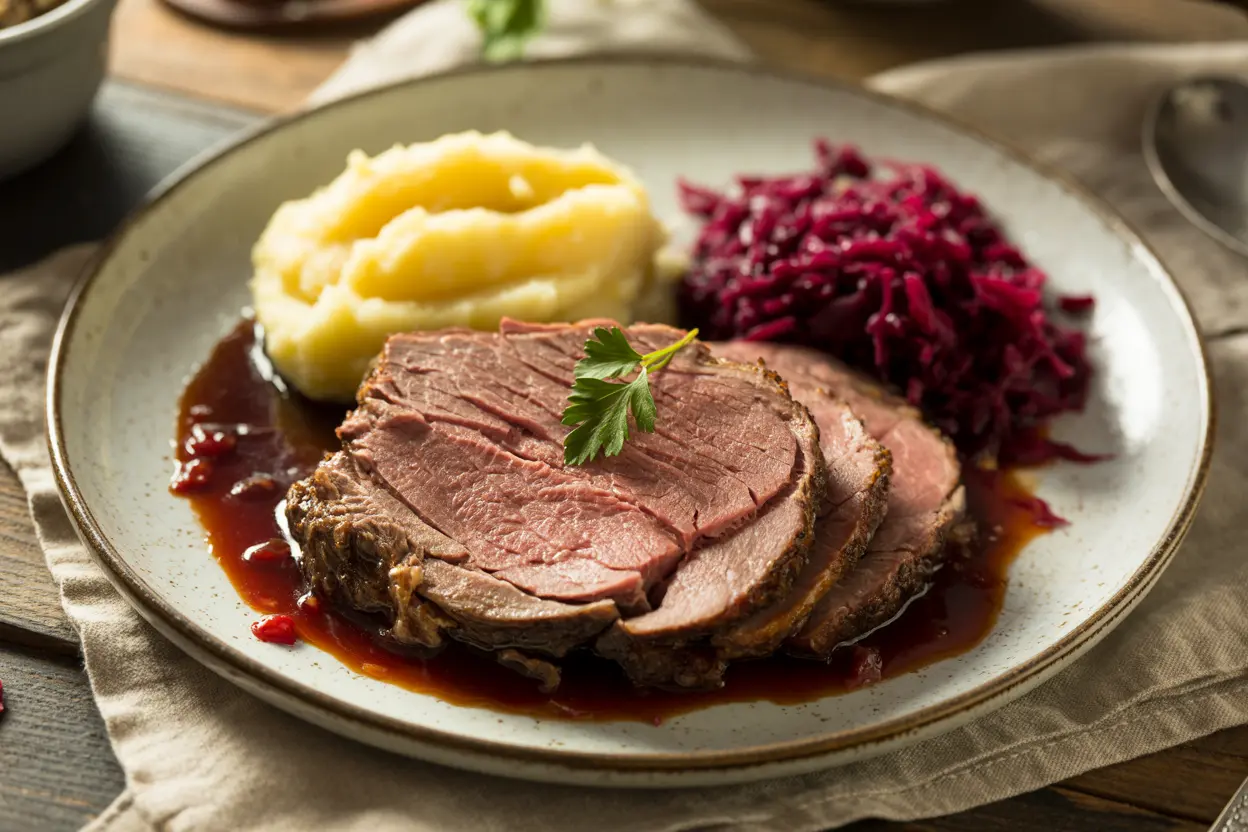
Authentic German Sauerbraten Recipe | Tender & Flavorful Roast
Want a hearty, flavorful dish that brings warmth and tradition to your table? German Sauerbraten is the answer. This classic pot roast features tender beef soaked in a tangy, savory marinade, slow-cooked to perfection, and served with a rich, slightly sweet sauce. The process takes a few days for marinating but rewards you with a meal that’s perfect for family dinners or special occasions. This step-by-step guide makes it easy to create an authentic Sauerbraten that’s sure to impress.
How to Make German Sauerbraten
Sauerbraten requires planning due to the marinating time, but the cooking process is straightforward. The result is worth the wait.
Ingredients (Serves 6-8)
- Beef: 3-4 lb beef roast (chuck, rump, or bottom round)
- Marinade:
- 2 cups red wine vinegar
- 1 cup water
- 1 cup dry red wine
- 1 large onion, sliced
- 2 carrots, chopped
- 2 celery stalks, chopped
- 10 whole black peppercorns
- 5 whole cloves
- 2 bay leaves
- 1 tbsp mustard seeds
- 1 tsp salt
- Cooking:
- 2 tbsp vegetable oil
- 2 tbsp all-purpose flour
- 1 tbsp sugar
- 1/2 cup crushed gingersnap cookies (about 8-10 cookies)
- 1 cup beef broth
- Other: Salt and pepper to taste, 2 tbsp chopped parsley (optional, for garnish)
Steps
- Prepare the Marinade: In a large pot, combine red wine vinegar, water, red wine, onion, carrots, celery, peppercorns, cloves, bay leaves, mustard seeds, and salt. Bring to a boil, then let cool to room temperature.
- Marinate the Beef: Place the beef roast in a large, non-reactive container (glass or ceramic). Pour the cooled marinade over the beef, ensuring it’s fully submerged. Cover and refrigerate for 3-5 days, turning the roast daily.
- Remove and Dry the Beef: After marinating, remove the beef from the marinade and pat dry with paper towels. Strain the marinade, reserving the liquid and discarding the solids.
- Sear the Beef: Heat vegetable oil in a large Dutch oven over medium-high heat. Season the beef with salt and pepper, then sear all sides for 8-10 minutes until browned. Remove and set aside.
- Make the Sauce: In the same pot, add flour and sugar, stirring for 1 minute. Slowly pour in the reserved marinade liquid and beef broth, stirring to avoid lumps. Add the crushed gingersnaps and stir until dissolved.
- Cook the Roast: Return the beef to the pot. Cover, reduce heat to low, and simmer for 2.5-3 hours, or until the beef is fork-tender. Alternatively, cook in a 325°F oven for the same time.
- Finish and Serve: Remove the beef and slice thinly. Strain the sauce if desired, then adjust seasoning. Serve the beef with sauce spooned over the top, garnished with parsley if using.
Tips and Tricks for Perfect Sauerbraten
These tips will help you nail the flavors and texture of this classic dish, even if it’s your first time making it.
- Marinate Long Enough: The 3-5 day marinade tenderizes the beef and infuses it with flavor. Don’t rush this step, as it’s key to authentic Sauerbraten.
- Choose the Right Cut: Chuck or rump roast works best because they’re tough cuts that become tender with slow cooking. Avoid lean cuts like sirloin, which can dry out.
- Crush Gingersnaps Finely: The cookies thicken and sweeten the sauce. Crush them into a fine powder for a smooth texture, using a food processor or a sealed bag and rolling pin.
- Balance the Sauce: Taste the sauce before serving. If it’s too tangy, add a bit more sugar; if too sweet, add a splash of vinegar.
- Use a Non-Reactive Container: Acidic marinade can react with metal, so use glass, ceramic, or a food-safe plastic container for marinating.
- Make Ahead: Sauerbraten tastes even better the next day. Prepare it a day in advance, refrigerate, and reheat gently to let the flavors meld.
How to Serve German Sauerbraten
This dish shines as the centerpiece of a meal and pairs beautifully with traditional sides to complete the experience.
- With Classic Sides: Serve with German potato dumplings (knödel), red cabbage, or spaetzle to soak up the rich sauce. Mashed potatoes work well too.
- For a Family Meal: Slice the beef and arrange on a platter with the sauce in a bowl for serving. Pair with roasted root vegetables for a hearty spread.
- For Special Occasions: Present the sliced beef with a generous drizzle of sauce and a sprinkle of parsley for an elegant touch. Add a glass of red wine to complement the flavors.
- For Leftovers: Use leftover beef in sandwiches with a smear of mustard and some sauce for a delicious next-day meal.
How to Store and Reheat
Proper storage keeps Sauerbraten flavorful, and careful reheating ensures the beef stays tender.
- Storage: Cool the beef and sauce completely, then store together in an airtight container in the fridge for up to 4 days. For longer storage, freeze for up to 3 months.
- Reheating: Reheat gently in a saucepan over low heat with a splash of broth to keep the sauce smooth. Stir occasionally and heat until warmed through (10-15 minutes). For frozen Sauerbraten, thaw in the fridge overnight before reheating.
- Meal Prep Tip: Slice the beef before storing to make reheating easier. Store the sauce separately if you prefer to control the amount used when serving.
Why This Recipe Shines
German Sauerbraten is a timeless dish that combines tender beef with a tangy, slightly sweet sauce that’s unforgettable. The long marinade and slow cooking create a melt-in-your-mouth texture, while the gingersnap-thickened sauce adds a unique depth of flavor. This recipe is approachable for home cooks, with clear steps and flexible options to suit your taste. Perfect for cozy dinners or festive gatherings, it’s a dish that brings comfort and tradition to every bite.